
National Eating Disorders Association
Blog
Social Media

Note: this piece uses identity-first language (autistic, disabled, etc.) based on the preferences of many of our community members. 

When I started watching Atypical, I was hopeful. Finally, there was a show purportedly centered on Sam, an autistic teen. Sure, Sam is the white, intelligent, relatively affluent, and male autistic person we’re all used to seeing. I was prepared for that. What saddened me was the realization that Sam’s character embodies many autistic stereotypes and further stigmatizes autism

Read more >

On October 9, NEDA surveyed over 333 people about how accurately they felt the media portrayed people’s bodies. Of these people, 68% of respondents chose “Very inaccurately,” 24% chose “Fairly inaccurately,” 7% chose “Fairly accurately,” and 1% chose “Very accurately.” 

Read more >

Media & Eating Disorders

Media and Eating DisordersWe live in a media-saturated world and do not control the message. There is no single cause of body dissatisfaction or disordered eating. However, research is increasingly clear that media does indeed contribute and that exposure to and pressure exerted by media increase body dissatisfaction and disordered eating.



 

In today’s culture, social media has begun to dominate even more of our lives, and its influence can quickly turn negative, according to a new study that focuses specifically on the effects of Instagram. 

Read more >

Every time a new piece of media hits the public regarding eating disorder representation, many of us are left to consider how the film and television industry can better portray the lives of those afflicted as well as convey the seriousness of these illnesses.

Read more >

How often do advertisements and social media posts generate discussion not about the cause of the post or advertisement, but because of the way the message was delivered?

Read more >

There’s been no lack of speculation about the effects of social media on body image and eating disorder recovery. On one hand, social media has fostered a diverse and vibrant body-positive and recovery community. On the other, social media often serves as a platform for anonymous bullying and face-and-body-altering filters. 

Read more >

At their core, eating disorders are all about obsession. Your illness is the voice that never quiets, whispering incessantly about the size of your thighs, the pounds you still think you need to lose, and most of all, food. It whispers about the food you “can’t” eat, the food that’s “safe,” the calories, carbs and grams of fat in every morsel that enters your mouth.

Read more >

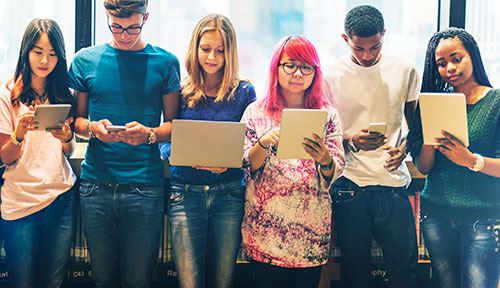
Social media has such a defining impact on our society, despite only increasing in popularity within the past few years. This is particularly true when it comes to young adults and eating disorders.

A study conducted by the University of Pittsburgh School of Medicine revealed that young adults who use social media a lot are more likely to develop negative body images and eating disorders.

Read more >

It’s a social media phenomenon. It’s in our faces every day. But for those of us with body image struggles, does it help or hinder? “Love your body!” So cries social media, preaching a shiny gospel of body positivity to all of us. At first glance, this seems a welcome oasis amid the onslaught of shaming advertisements and fitness and diet posts.

The “body-posi” movement can be beneficial in so many ways, but we need to have a bigger conversation about it—which aspects of the movement are actually beneficial, and which parts can, themselves, be triggering and harmful? 

Read more >

Pages