

Like other holidays, Hanukkah is often a time when family comes together to celebrate the miracles that took place so many years ago. For those in eating disorder recovery, this can be both a time of inspiration as well as a potentially challenging time, due to the nature of large crowds, traditions around food, and time spent with family. Below are 8 tips to help during this time.
1. Prepare. Holidays are a time of gathering and celebrating as well as a time of dysregulation; schedule changes, unexpected visits, and holiday parties can all impact the road toward recovery. Hanukkah is often filled with get togethers and specific traditional foods to commemorate the day. Take some time to prepare for how this might impact your experience. Are you seeing family members for the first time in a while? Not used to the food being served or unsure if you’ll feel comfortable? Pull out your tool kit and utilize the supports and skills that you have to best prepare for your experiences around the holiday.
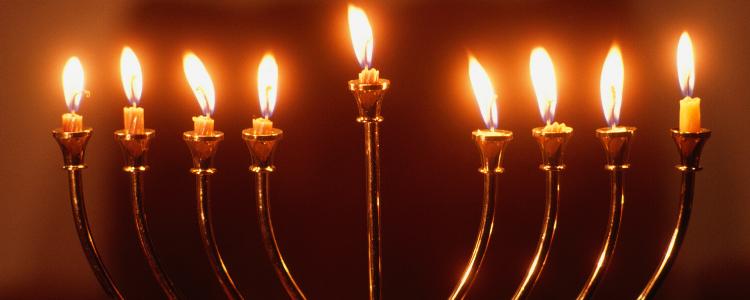
2. Brush up…on your history! Hanukkah is a holiday commemorating happenings over 2,000 years ago when the Jewish people were persecuted and were being forced to give up their faith. The Maccabees fought back, and with the help of God, were able to defeat the enemy. Additionally, God made a miracle that one portion of oil lasted in the temple for 8 days. We remember these miracles and our salvation by lighting the Menorah each night to commemorate the miracle of the oil and by eating foods made with oil like doughnuts and potato latkes. We also play Dreidel as the Jews at the time played with tops such as these to hide their actual engagement with Jewish law during persecution. When we reflect on our traditions, on the miracles that took place, we are able to practice gratitude and understand more about ourselves and heritage. This allows for some shift from the focus being on the negative, to instead finding meaning in the holiday itself.
3. Reflect on your own miracles. Just as the Maccabees fought and were victorious in a battle, so too is an eating disorder a battle in its own way. Reflect on your progress and your motivation toward recovery. The process includes highs and lows, ebbs and flows, and yet there is hope. Just as there was always hope for freedom from persecution, so too there is hope for freedom from the disorder. Pull out a journal and write or list your miracles since last Hanukkah and what you hope your year to come will include and how you might plan to get there.
4. Create some non-food traditions. Hanukkah isn’t simply about the food, even as there are foods typically eaten on this holiday. Get creative, do some research. Find ways to celebrate that allow you to connect with the holiday and with yourself.
5. Maybe create some food traditions…and maybe you can create some traditions around the food! Depending on where you are in recovery, maybe you’re ready to challenge yourself and incorporate some latkes into your meal plan. Maybe you can try eating with your family members this year if you haven’t in the past. Take some time to think out and talk about what you might be ready for and what you might be able to do, as those may be two different things.
6. Remember, it’s not about the number. The oil may have lasted for 8 days and there may be Jewish laws around this number and miracle, but that isn’t what the holiday is truly about. It’s about the history of our people and the miracles, the hope, and the manner in which we were saved. Use this. You are not simply a number; that’s not your true value or purpose. Explore why and use this theme to guide you, whether it’s through a mantra, journal entry, or a post-it note.
7. Ask for help. Hanukkah is a time when we celebrate the help we received. Always keep in mind that to get through any scenario or any potentially difficult time, it is important to identify your supporters and figure out how they may be able to help you, whether that includes scheduling, meal plans, or even reaching out to check in.
8. Learn from the Shamash. The Shamash is the candle that rests higher than the other eight candles and is used to light the others. Let us reflect that we all have an inner light, a light that we can use to help inspire and raise up others. Perhaps this holiday season you help to those in need, write a thank you card for your supporters, or even keep a gratitude journal for all eight days to help propel you forward in how you give back to others.
Let this be a time to let your inner lights shine through. Happy Hanukkah and holiday season to you all!
Temimah Zucker is a primary therapist at EDTNY Monte Nido and has immersed herself in the field of eating disorders after her own recovery. She writes on the subject, is a public speaker, and is forming a non-profit to address eating disorders in the Jewish community.