
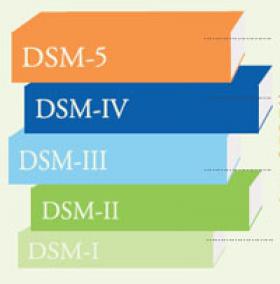
 For people with out-of-control eating issues, the publication of the new DSM-V is nothing short of a triumph. Why? Binge Eating Disorder (BED) has finally gotten its own diagnosis code identifying it as a mental health issue separate from other EDs like anorexia and bulimia. I discovered there was something off about my relationship with food when I was 15 years old, years before anyone other than hardcore psychiatry researchers had even heard of BED. I knew I didn't have anorexia, because I didn't starve myself or severely restrict my food, I knew I wasn't bulimic, because I couldn't make myself throw up.
But there had to be a name for what it is when you do the binge part of bulimia without the purging...right? Back then, most people thought it was just "gluttony." Even today, despite the fact that BED first appeared in the DSM in 1994 (not as its own condition, but as part of a catch-all category called "eating disorders not otherwise specified") some people still choose to ignore the vast amounts of evidence that BED is a real—and fixable—mental health issue. I'm thinking in particular of the painfully outdated comments about binge eating made by retired psychiatry professor Allen J. Frances on his Psychology Today blog in which he actually called BED gluttony!
Those of us who have felt the nearly irresistible urge to eat, eat, eat long after our physical hunger—and even the comfortable limits of our stomachs—have passed know this addict-like behavior has nothing to do with willpower. Everyone may overeat on Thanksgiving, or accidentally polishes off a bag of chips once in a while. But someone with BED finds themselves with a feeling of total loss of control around some foods, often eats in secret, eats more than any reasonable person would, may eat to the point of pain, and feels utterly compelled to keep doing this despite how emotionally and physically terrible it feels.
What eating disorders researchers and treatment specialists now understand is that just like many other diseases, binge eating tends to run in families (they've even identified certain genes which may be associated with BED), that these issues can start in kids as young as age 6, and that therapy such as Cognitive Behavioral Therapy can help people recover.
My hope is that with this official recognition of BED as a mental health condition, fewer professionals and lay people alike will be able to write it off or stigmatize it in the way that Dr. Frances so unfortunately did. And that young men and women like me won't have to waste years of their lives thinking they can't stop this out-of-control eating, or going on diet after diet which can make binge eating disorder worse. All people who suffer with disordered eating—or official disorders like anorexia, bulimia, or BED—deserve to get the support they need to recover and live their lives happy, healthy, and free.
—Sunny Sea Gold is a recovered binge eater, author of Food: The Good Girl's Drug (Berkley Books, 2011), and founder of the support site HealthyGirl.org.