

As a child, I loved running into my parents’ bedroom the morning after they had attended a ballet performance. I would pepper them with questions and dream of the day that I might be able to be on stage like the ballerinas I idealized.
I pored over fashion magazines. In the grocery store checkout aisle and at the physical therapist’s office waiting for my mom to pick me up, I flipped through pages of long, thin limbs and tips for obtaining the most flattering wardrobe and an ideal body.
When I was 15, I tore my ACL. I used the time spent healing from this injury as an opportunity to stop eating. Over the years, I realized there were plenty of girls like me; I was one of many who had gone down this path of starvation. Some went further than I did, and some never came back. I hear whispers of conversation about this problem, but rarely does anyone ever say the words anorexic, bulimic or (gasp!) eating disorder.
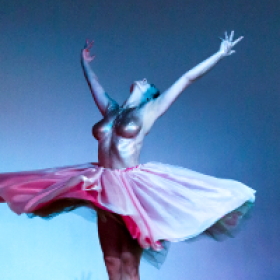
My personal struggle with disordered eating inspired me to self-produce my second full-length show, “Something Pretty.” The show physicalizes the mental and emotional struggle that individuals with anorexia nervosa, bulimia nervosa and other eating disorders are faced with on a daily basis.
By looking at these eating disorders through the lens of dance, we are able to shine a light on the common idealized notion that many dancers seek to achieve. In addition, we highlight the negative social stigma around admitting one has such a disorder and the lack of assistance available. It is clear that this stigma needs to be dismantled from its core in order to move in a healthy direction. “Something Pretty” seeks to do just that.
Eating disorders are the deadliest mental illness in the United States. Approximately 20 million women and 10 million men will suffer from a clinically significant eating disorder at some time in their life, and this doesn’t include the scores of individuals who suffer from body dissatisfaction and sub-clinical disordered attitudes and behaviors. Many of these cases are seen in females ages 15 to 24, and many of them participate in dance. However prevalent, these disorders are not recognized. We hope to change this stigma through conversation, revealing the ugly demon beneath the shadows of the ballerina's glittering facade.
I ask you to participate in this conversation by getting curious. Ask questions. Will one of those dancers be walking with a cane by age 45 due to a calcium deficiency? Will they be able to have children? Why is there no pipeline for success, or a team of professionals, available to a dancer who is told to lose weight?
At what point do we say enough is enough? I say the time is now.
Photo courtesy of Laura Wetzel