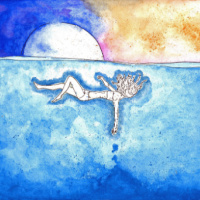


As a composer, my purpose always seemed (keyword, seemed) straightforward. Even before I dealt with anorexia nervosa, I thought my sole reason for existence was to make music and have it heard. While that is a major goal of mine — as it is for any composer or artist out there — it’s by no means my reason to live.
Once I discovered that making music was strictly my craft and not my identification as a human being (“I compose music,” not “I’m a composer”), my life was changed forever. That’s why I want to share my story to help you think about finding your purpose, especially if you’re still searching.
My battle with anorexia started from as early as junior/senior year of high school. Through various events that seem somewhat trivial now, their trauma for me as a 17-year-old boy kept building. Being cheated on by my first serious girlfriend during my freshman year of college finally threw me over the edge. My health plummeted shortly thereafter. Essentially, I wanted nothing to do with life anymore. From one event of abandonment or betrayal to another, I couldn't help but think that I was the problem and that there was something wrong with me.
It's why I left college for a year. It's why I shut myself out during my five-year university experience. Parties were near-impossible. Even going to recitals and concerts (a requirement for my major) was equally difficult. Anything that interfered with anorexia’s internal desire was just a giant trigger for anxiety.
Everything changed, however, when I looked beyond “I want to write music for a living” as my reason to dedicating much more effort to recovery.
Maria — the woman I married in July of 2016 — gave me a purpose. There are some who have questioned that motivation, saying that I shouldn't "rely on another for my own recovery." Some even suggested, “But you’re so talented! Shouldn’t writing music help you through this?”
It was never about me needing full dependence on her for my own health. Nor was music alone enough to motivate me to recover (and I compose music as a career, which says a lot about how little craftsmanship can influence the desire to recover). Rather, it was in my desire to give her so much when I couldn't, because of anorexia, that I found my own personal goal to recover. Not in needing another, but in wanting to be there for another and giving them what they need.
“How could I be a husband if I was so sick that I could barely attend college, let alone create music or have a full-time job?”
It was through that question of self that helped me override anorexia’s grasp on me. I wanted to be more than just a composer of music. I wanted nothing more than to give myself completely to another individual. Unless I overcame my disorder, my purpose as a future husband could never be fulfilled. It was in suffering that I found strength. Once my purpose was uncovered, there was no way anorexia could stop me from succeeding in the fight.
Purpose isn’t something that’s easy to find, nor is recovering from an eating disorder a simple task; it takes a ton of work, and most of that work requires an internal reason. As much as I tried to make recovery about composing music, that wasn’t good enough. I had to look much more internally and see what I truly desired for my life.
There isn’t quite anything like hearing your music performed and heard by others. I don’t think I’ll ever tire of it. However, that experience doesn’t compare to the moment my wife smiles at me when I take care of her.
Look internally. Whether you’re suffering, recovered, or simply reading this out of sheer curiosity, I encourage you all to look inside and ask yourself:
“What do I have that I want nothing more than to give to the world?”