
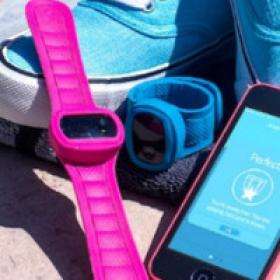
For the holidays this year, some parents may be buying their kids the Gabba Goods fitness tracker. It’s one of several wearable fitness devices geared toward kids to promote exercise and combat childhood obesity. It seems like a thoughtful idea at first glance, but I can think of plenty of other things for kids to keep track of. They can count the things they are grateful for, or the stars in the sky; they can keep track of their dreams and the days until Christmas and the candles on their birthday cake. Things kid don’t need to track? Steps walked and calories burned.
Some of these fitness trackers are marketed to kids as young as four. Four?! Does a toddler really need to worry about the number of steps they’re taking each day? They’re practically still wobbling around! Moreover, these devices turn fitness and activity into something they have to do in order to reap a reward, such as first place in a ‘family challenge’ or a new ‘adventure trail’ that is part of the tracker’s features.
Some of these devices include features that may help kids develop good habits such as making the bed and brushing their teeth regularly. We all know that the way to get through to most kids these days is through technology, so these features are pretty cool. Still, it’s concerning to see trackers keeping ‘score’ of how active kids are and pitting them up against other family members. Different people have different needs, and comparing a child to an adult is...weird.
There is nothing inherently wrong with encouraging kids to get outside, to be active, and to expend their energy (we all know they have massive amounts of energy!). Yet I would argue that fitness trackers could end up making kids loathe physical activity, or grow up with a totally twisted interpretation of it. Exercise and activity is not a punishment, nor is it something that we do to “make up for” eating. Fitness trackers give us the sense that we need to work off the food we ate, or reach a certain weight threshold, or log a certain number of steps each day. It’s just not true.
Just like forcing kids to eat their vegetables tends to push them further from leafy greens, monitoring their physical activity may only end up associating movement with punishment or responsibility. We can instead be active and healthy role models for kids by making movement a part of our daily lives. A wristband or pedometer that tracks a child’s every move day in and day out is not super motivating; it’s creepy. What is encouraging is playing with friends and family. Bike rides, play dates to the park, running around with the family dog - these things are inspiring and enjoyable. Fitness and health come in many different shapes, sizes, and through different means. A fitness tracker won’t tell you that.
Kaitlin Irwin is recovering from anorexia. She spent her college years struggling to hide her illness and hopes to use her love of creative expression to spread positivity and love to others.