National Eating Disorders Association
Blog
Special Topics

Last night, I had the privilege of attending “Gender and Sexuality in the Doctor’s Office: LGBTQ Experiences of Healthcare Across Contexts,” a visiting scholar lecture at CLAGS by Emily Allen Paine, a doctoral candidate in the Department of Sociology at The University of Texas at Austin. Many of us are aware that health disparities exist in the LGBTQ+ community. But what causes these health disparities?
Read more >

Note: this piece uses identity-first language (autistic, disabled, etc.) based on the preferences of many of our community members. 

When I started watching Atypical, I was hopeful. Finally, there was a show purportedly centered on Sam, an autistic teen. Sure, Sam is the white, intelligent, relatively affluent, and male autistic person we’re all used to seeing. I was prepared for that. What saddened me was the realization that Sam’s character embodies many autistic stereotypes and further stigmatizes autism

Read more >

Halloween is right around the corner. While the smell of cinnamon and carving pumpkins can be exciting, costumes are sometimes a cause of offense. In previous years, Halloween costumes have had a tendency to veer more toward offensive than fun by parodying race, religion, mental illness, gender, and disabilities. As you start to pick out your costume, keep these things in mind.

Read more >

Leon Silvers is a psychotherapist, founder, and director of Silvers Psychotherapy, a group therapy practice in NYC. He specializes in working with clients with eating disorders, substance abuse, trauma, and LGBT issues.

Read more >

When I was deeply suffering from my eating disorder, I hated my body. I abused it. Worst of all, I separated myself from it. My mind became one entity and my body became another. To my mind, my body seldom did anything right. 

Since entering recovery, I have had to learn how to care for my body, how to nourish it, and how to appreciate it. But most importantly, I have had to accept that I am my body and my body is me. I will never be able to separate from my body, nor should I want to. When I hurt my body, I am hurting myself.

Read more >

We are nearing the end of Hispanic Heritage Month (also known as Latino Heritage Month), and although this month purports to celebrate and honor brown culture, it is a time that evokes feelings of dissociation for me. Yes, I am of Mexican-indigenous descent, and I genuinely appreciate recognition and celebration of people of the brown diaspora. I don’t, however, understand the logic behind the language used—Hispanic, Latino, Latinx—to describe a group of people that I have felt forced to identify with all these years. 

Read more >

October marks LGBTQ History Month, a time for reflecting on the community’s history as well as the LGBTQ+ civil rights movement. The community’s numerous accomplishments would not have been possible without the efforts of countless individuals working tirelessly for equality. Here are 10 individuals from the past and present who have made the world a better place—and have offered words of wisdom on confidence and taking up space. 

Read more >

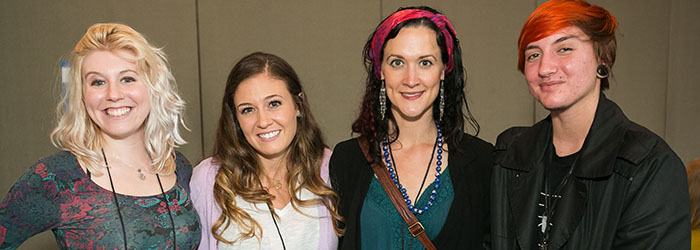
Last week, I had the privilege of attending  In My Mind: A LGBTQ People of Color Mental Health Conference organized by DBGM. Held once a year in New York City, the conference centers the voices of LGBTQ+ people of color, particularly trans women of color. 

Read more >

It’s no secret that gender stereotypes are an omnipresent aspect of today’s society. A trip to a toy store, visit to a playground, or afternoon watching children’s television programs reveal that from an early age, girls are expected to be vulnerable and in need of protection while boys are supposed to be adventurous and independent. These harsh norms are often ingrained into children before the time they reach age 10. 

Read more >

This week, the bisexual+ community is being celebrated and recognized. #BiWeek aims to increase awareness and support for LGBTQ people who fall under the bisexual+ umbrella. LGBTQ people already have many issues of being misunderstood, mislabeled, bullied, and victimized. In addition to these issues, people who fall into the LGBTQ community are far more likely to suffer from an eating disorder. 

Read more >

Pages