
National Eating Disorders Association
Blog
Special Topics

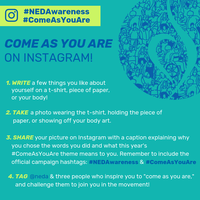
Instagram has always been a place for exploring your passions, sharing your interests, and connecting with the people and things you love. We want you to feel comfortable to express yourself, and to feel enriched and empowered as an individual by what you experience. 

Sometimes, however, the content you see on social media can make you feel pressured to present a perfect or unrealistic version of your life — or maybe you find yourself comparing your life and body to others.

Read more >

What does body acceptance and eating disorder recovery mean to me? Every day is a challenge. My old habits still linger and the hurtful thoughts are always in the back of my mind. I have to remember all the accomplishments that got me to this beautiful point I’m at right now in life. When I finally accepted my body for the beauty it is, I didn’t care if it had an embarrassing scar or an imperfection on it. I am thankful for every flaw and curve that I have!

Read more >

Editor’s note: Family Based Treatment (FBT) is one of many effective, evidence-based treatments for eating disorders. Treatment is not a one-size-fits-all approach; it should be tailored to the individual and will vary according to both the severities of the disorder and the patient’s particular problems, needs, and strengths. Click here to learn more about the

Read more >

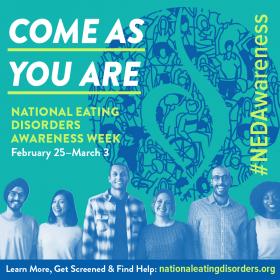
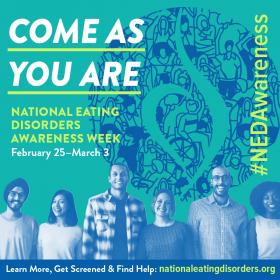
As you’ve probably heard by now, the theme for this year’s National Eating Disorders Awareness Week  (#NEDAwareness) is Come as You Are.

We hope Come as You Are sends the message to everyone – especially those who have not previously been a part of the conversation – that their stories are valid and their experiences are worth sharing.

Read more >

In a lot of ways, the traditional image of a woman in stock photos mirrors the common stereotype of a person with an eating disorder: young, slim, attractive, and white. However, we all know that those stock images don’t reflect the world around us, and yet most marketing and advertising relies on those images without any alternatives. Canva is working to change that.  

Read more >

Because NEDA recognizes that many struggling with eating disorders have experienced trauma, oftentimes sexual assault, we feel it’s important to raise awareness around related issues. In recognition of today’s designation as Human Trafficking Awareness Day, we asked Kristi Taylor, Education Director with the Advocacy Center in Ithaca, NY, to answer some related questions. 

For starters, can you share with our readers some basic information about human trafficking? What it involves? Some warning signs?, etc.?

Read more >

The National Eating Disorders Association (NEDA) is committed to providing help and hope to those affected by eating disorders (EDs). The Feeding Hope Fund (FHF) for Clinical Research was established in 2013 in order to support projects that will improve the lives of those affected. Over $1 million in research grants has been awarded for innovative treatment and prevention. In 2018, we received an enormous increase in the amount of applications from 2017, which we believe is a good indication of increasing awareness of this very unique ED funding opportunity. 

Read more >

With a few days until the end of the year, New Year's resolutions are on the forefront of many people's minds. I've seen countless lists focused on weight loss, exercise, and huge life changes (I WILL NOT hit snooze! I will call my grandparents EVERY SUNDAY! etc.), and I wanted to create a list that was a bit different. These are my five New Year's resolutions for people in recovery:

1. Start a gratitude list

Read more >

This New Year's Eve I had some flashbacks.

When most people think about New Year's Eve, they think of attractive people laughing in glee, throwing pink streamers in the air and making out. They think of rom com fantasies of meeting the love of your life in Times Square and crying over how, like, cute this moment totally is. But most of my New Year's Eve memories do not fall in this category. Most of my memories connect to my rigorous resolutions and my hope for a more perfect new year of follow-through.

Read more >

Eating disorders have always played a central role in my life. For so many years, an eating disorder dominated my every thought and feeling. No matter what I did or where I went, it accompanied me like an unwanted shadow, turning every life event into a battle against food and my body. I longed for the day when my mind would be free from the struggle, when my relationship with food could be sustainably controlled, when my body would finally look like I always wanted it to and when I could be sure it would stay that way forever.

Read more >

Pages