
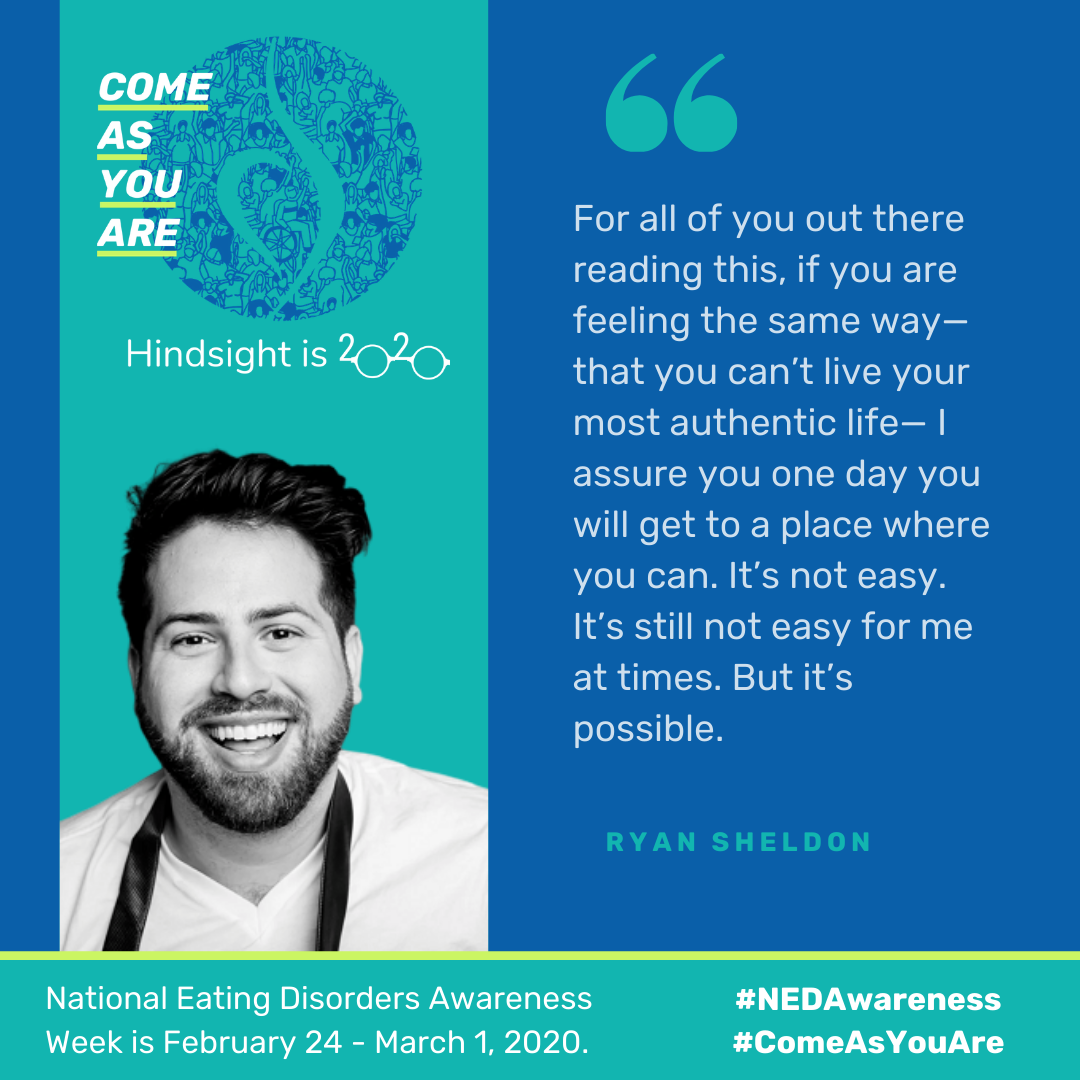
Reflecting on my past is something I’m accustomed to, but when I would do this before, I always reflected on the negative. It’s comfortable for me to think about all the challenges I went through—not easy, but comfortable. From my eating disorder, to my body image struggles, to my depression, I was comfortable living in that space; after all, those things were part of my identity. However, this past year something changed, and for the first time ever I feel proud of who I was before, who I am now, and what I’ve accomplished. Getting to this new “proud” place was uncomfortable.
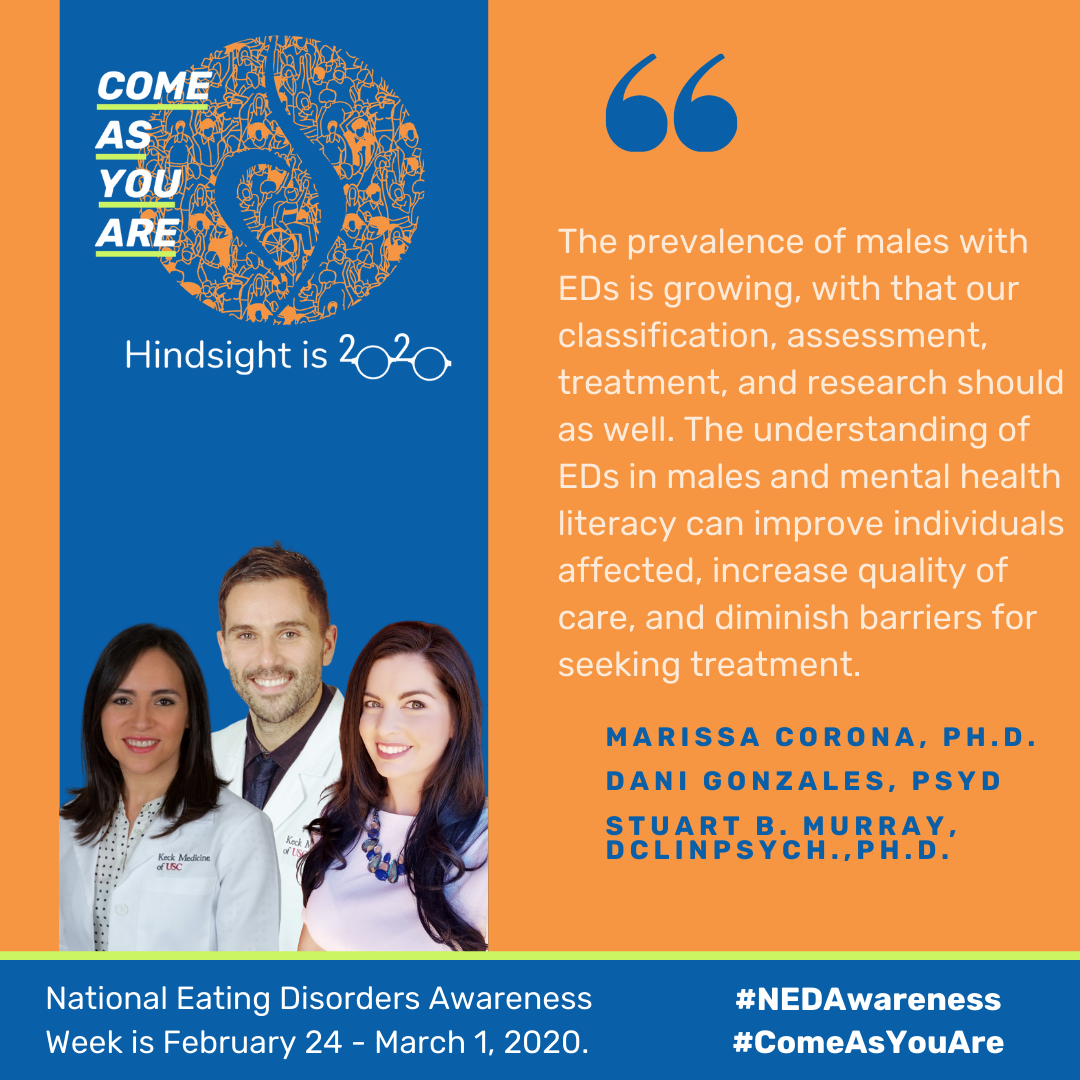
Eating disorders (EDs) do not discriminate against age, ethnicity, sexual orientation, or even gender. While research on male eating disorders is scarce, findings consistently illustrate unique variants and differences in presentation and symptomatology. Thus, there is a critical need to understand the nuances between genders in order to better conceptualize, prevent, and treat, eating disorders adequately in males.
We want the time people spend on Instagram to be supportive, positive and empowering. For much of our community, this rings true to their experience. However, social comparison is one of the growing challenges we’re seeing on Instagram, especially for young people. Body image is one area in particular where people may compare themselves to others and feel pressure to look a certain way.
We also know that Instagram is a place where many people have found support and inspiration within the body acceptance community.
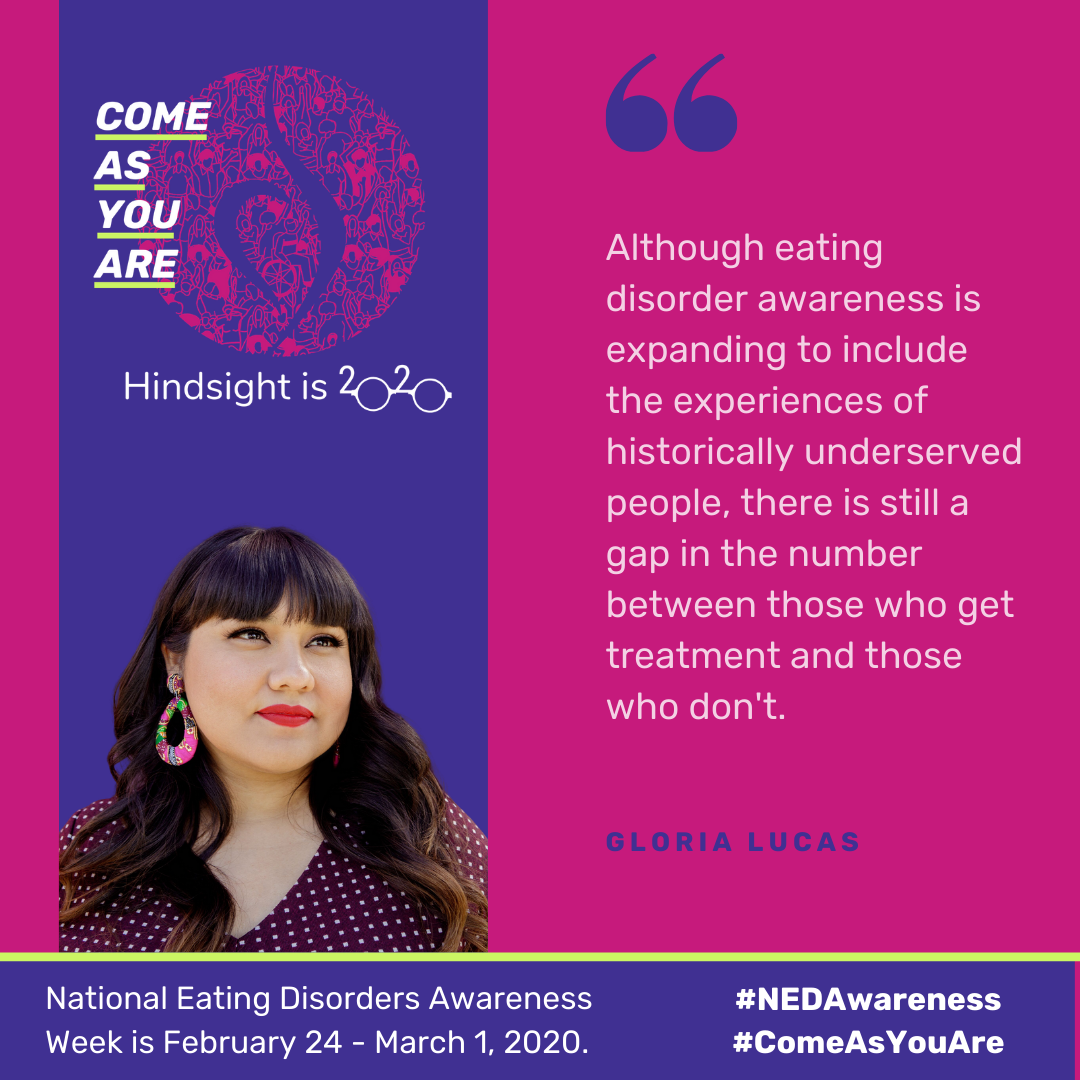
The past few years has seen a significant rise of the discussion on the ineffectiveness of diet culture and the harm of fatphobia. Thanks to social media and the work of many grassroots community members, eating disorders are being analyzed within a social justice framework. These changes have been motivating and life changing for many.
The day we’ve all been waiting for is just around the corner — NEDAwareness Week kicks off Monday!
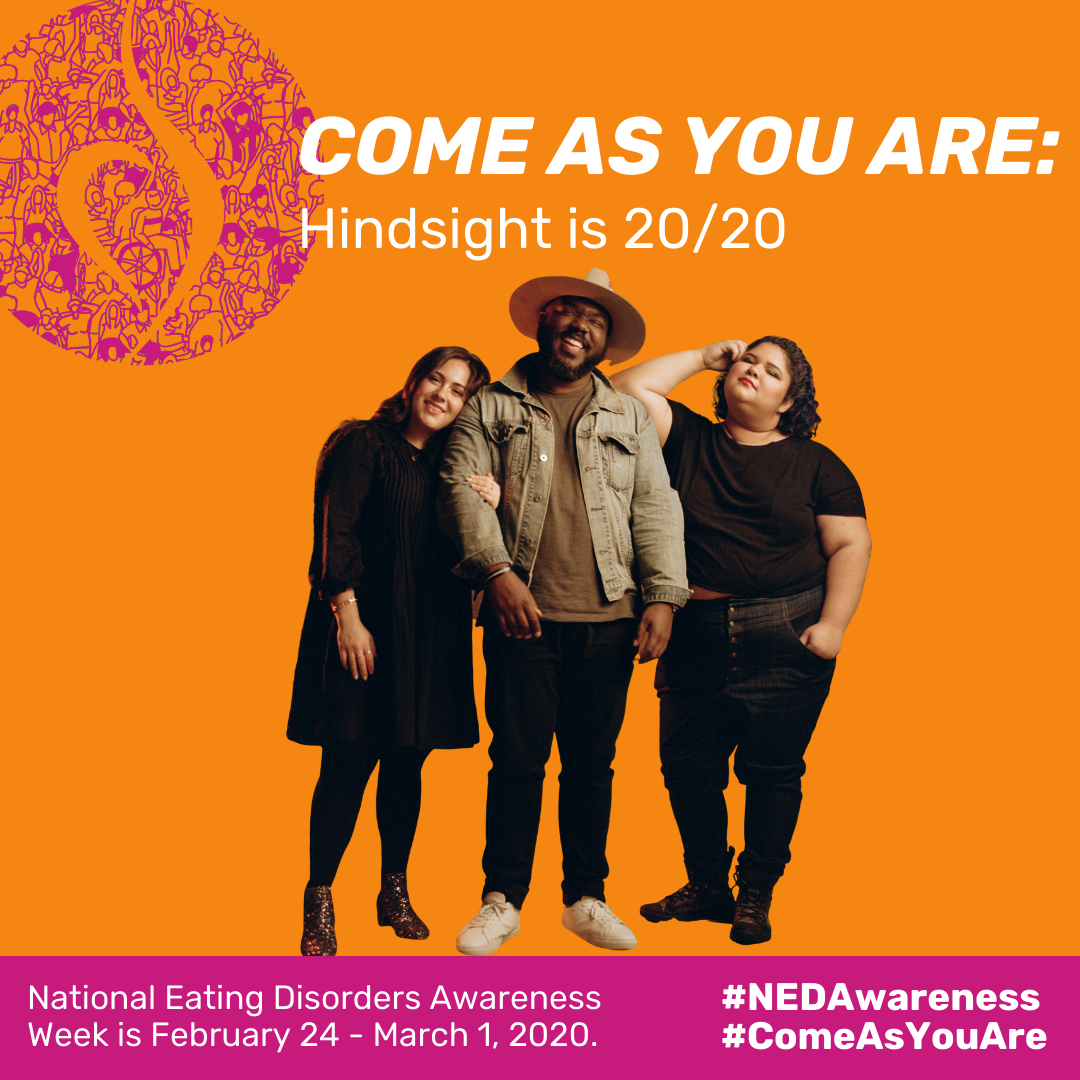
Building off last year’s success and continued relevance, we want you to #ComeAsYouAre again for NEDAwareness Week 2020! From February 24th to March 1st, we encourage our community to embrace this year’s theme, Come as You Are: Hindsight is 20/20, by reflecting on the positive steps you've taken — including those stemming from setbacks or challenges — toward accepting themselves and others.
HOW CAN YOU BE INVOLVED?

In my twenties I made a decision that shaped the rest of my life. I participated in a reality TV program called The Biggest Loser. It was in its infancy at the time, only on its third season. I had no idea what to expect when I signed on. I just bought into the idea that to be healthy or happy I needed to be smaller. Instead, I became unhealthier, developed disordered eating, and hated my body more than I ever had.
Building off last year’s success and continued relevance, we want you to Come as You Are again for NEDAwareness Week 2020! From February 24th to March 1st, we encourage our community to embrace this year’s theme, Come as You Are: Hindsight is 20/20, by reflecting on the positive steps they’ve taken — including those stemming from setbacks or challenges — toward accepting themselves and others.

For some of us, when the first house on the block puts up their holiday lights, it’s a time for celebration – it’s a time to indulge in savory baked goods, flowing holiday cocktails, and a 24-hour long lineup of guilty pleasure Christmas movies. For others, it’s a time to aloofly remember just how imperfect their lives have become.
The holidays are a time when we can all begin to embrace loved ones and reflect on the year. Yet the person you should be embracing the most is yourself.
This is especially true for those who are battling with an eating disorder.
In addition to guilt and anxiety about eating, the holiday season can cause people who struggling with eating disorders to feel guilty about not loving themselves enough within the last year; to set unattainable goals for the next year; or to feel guilty about not taking care of their bodies enough during the previous year.
I didn’t choose to have an eating disorder, but rather an eating disorder decided to choose me. Years ago, my “innocent” diet crossed a line from disordered eating to a full-blown eating disorder. I didn’t realize that I had a biological predisposition to an eating disorder or that there was a psychological component. As a successful corporate career executive juggling infants/toddlers (with a traveling husband), while also caring for aging parents with significant health issues, my environment made for the perfect storm which led me down a road to anorexia.