

Perfectionism is often a trait of many folks who are in recovery from eating disorders, including me. My childhood traumas left me feeling flawed, inherently bad, and not good enough for anyone. I believed that if I was a “good girl” and excelled at all things, my life would be better.

I didn't always hate my body.
I remember running barefoot in the soft, freshly mowed grass as a little girl, chasing after fireflies. I remember digging through dirt to pull out weeds in the garden, and planting my mom’s favorite flowers. I remember hiking through the woods behind my house, imagining I was moving among fairies, until it was dinner time.
My body was a vessel for excitement and joy.

During the safety demonstration on airplanes, the flight attendants always remind passengers flying with children to apply their own oxygen mask before they place one on their child. Why? You need to take care of yourself before you can take care of others. Being a caregiver for an individual with an eating disorder is not always an easy task. Your primary goal is to look after that person and provide them with an infinite amount of care, love, and support. It’s important to remember that caregivers also need support and to practice self-care.

Knowing the right thing to do or say is not always easy, and there is no one-size-fits-all solution to navigating eating disorders. In fact, the “right thing” to say one day may be the “wrong thing” to say the next. It is a challenge both for the individual battling an eating disorder and their support system.

For some, this may come as a surprise, but for the majority of my teen years, I was consumed by an eating disorder. It has been difficult for me to speak about it openly because I kept it a secret for so long.
There have been many moments in my life when I have questioned if I am lovable. My belief about what being lovable looked like began when I was a toddler and realized I'd much rather play with the boys than be around the girls. As we aged together I began to feel rejected as some of the boys uttered, “You can’t play with us. You’re a girl!” The words, “You’re a girl” would be repeated by many others as I grew into my young adult years. Each time was another blow to my gut, knocking the wind out of my body and leaving me feeling lost, broken, and unaccepted.
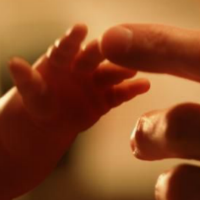
There is enormous cultural pressure to have our bodies look and feel the same after pregnancy and childbirth. These narratives about “getting your body back” are presented as a focus on health, but there is nothing healthy about the expectation that your body will be unchanged by birthing a baby.

The relationship between eating disorders and depression is a complex problem to understand, treat, and research. The parable of the three blind men who encounter an elephant illustrates the problem faced by patients and their providers. It is easy to misperceive that the elephant is only a long hose (trunk), a rope (tail), or the side of a building (body), depending upon which part of the elephant you encounter. People with eating disorders force us to face our collective confusion about the nature of treatment and intervention.

Star Wars, one of the most epic stories of all time, debuted 40 years ago today. A classic example of the hero’s journey, Star Wars has become a staple in our cinematic culture, but the lessons have always gone beyond the screen. Even if you have never seen the film, everyone knows about “the Force” and “the dark side.” Most of us have had to find the Force within us to fight off our own version of the dark side. For some, eating disorders are the dark side.

It was a hot May afternoon in Florida when my mom told me I was no longer allowed to exercise until I reached a healthy weight. She had already asked that I not post pictures of myself on Facebook, for fear that future employers might see what I was going through. I was stressed out, depressed, and losing weight fast.
My mom had another word for it.
Relapse.