
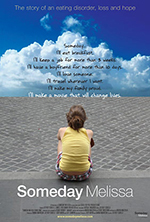
Reprinted, with permission, from Judy Avrin of Someday Melissa. Originally posted January 9, 2014
It is with great peace that I share the news that the National Eating Disorders Association (NEDA) is now the exclusive distributor of Someday Melissa.
Reprinted, with permission, from Judy Avrin of Someday Melissa. Originally posted January 9, 2014
It is with great peace that I share the news that the National Eating Disorders Association (NEDA) is now the exclusive distributor of Someday Melissa.

This week, the Federal Trade Commission (FTC) charged several weight-loss companies with fraud and, to be honest, it’s about time. The products in question – Sensa Products, L’Occitane, HCG Diet Direct and Lean Spa – are just a handful of the hundreds of these types of companies that are peddling products that can contribute to the development of an eating disorder.

About ten years ago, I got intensely interested in the complex world of eating disorders after reading a newspaper article about a teenage boy with anorexia—which shocked me, because I’d had no idea boys or men could even get eating disorders. Of course, this was only my first shock.
I dove into the subject and read everything I could get my hands on—novels, nonfiction books, articles; I watched personal accounts on YouTube, and met with doctors and their former patients. What I found was something that kept coming up again and again:
The voice in your head.

“We delight in the beauty of the butterfly, but rarely admit the changes it has gone through to achieve that beauty.” — Maya Angelou
Merriam-Webster defines resolution as determination or a course of active decidedness. When struggling with an eating disorder, self-destructive behaviors can sometimes be mistaken for resolve. However, once you decide to turn toward recovery, resolution and determination shine like brilliant stars, illuminating steps worth taking and the truest form of existing beauty: the authentic, empowered you.

Christmas can be one of the toughest times of the year, and not only because you get carried away by the commercialism spin and spend too much on presents. The true meaning of Christmas is wonderful, of course, but the other warm and cozy aspects of Christmas - food and family, can fill some of us with dread.

I hated holidays when I was in my eating disorder. I felt like I was in a minefield of panic. I would tip toe through the eating disorder detonators only to have to deal with worried family.

At NEDA we know that holidays can be a stressful time for families and individuals struggling with, or pursuing recovery from, an eating disorder. So, we asked the NEDA community to share their strategies for navigating the holidays in the face of such challenges. A few themes emerged, and we’ve put them together here to offer helpful perspectives and steps you can take to maximize the enjoyment of your holiday gatherings. If you have a friend, or family member affected, take a few minutes to share these tips and discuss how you can be a part of their planning and support.

Courtesy of: Center for Change / Compiled by: Michael E. Berrett, PhD
1. Eat regularly and in some kind of reasonable pattern. Avoid “preparing for the last supper.” Don’t skip meals and restrict in an attempt to make up for what you recentlyate or are about to eat. Keep a regular and moderate pattern.

On October 10th, 200 passionate individuals converged in Washington, DC to meet with their representatives at NEDA’s first Federal Lobby Day, co-sponsored by the Academy of Eating Disorders (AED) and the International Association of Eating Disorder Professionals (iaedp). Despite the government shutdown, the threat of a truckers strike around the city and pouring rain, participants made their way to the Hill to use their voice to make a positive change.
Lobby Day Progress
“Change happens when you understand what you want to change so deeply that there is no reason to do anything but act in your own best interest.” — Geneen Roth
Food, family gatherings and thankfulness are centerpieces of many Americans’ holidays—often in that order. These very traits commonly deemed attributes are precisely what make the food-centric season challenging when you have an eating disorder, which can make festive food displays daunting and the company of others intimidating