

For all of my childhood, I was considered "overweight." Whether it was my food choices or just genetics I'm not sure, but I was okay with it. I was a happy kid and I enjoyed life and everything it had to offer. As I started to get older, people like family friends, coaches, and peers would say things to me or my parents about my weight.
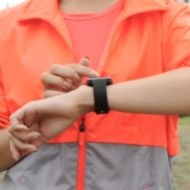
Citing rising “childhood obesity rates,” Fitbit is set to launch the Fitbit Ace this spring, a device meant for children. The $100 device will allow kids eight and older to track their steps, along with “an occasional reminder to get off the couch.”

"Dear KJ" is a monthly advice column by Dr. Kjerstin "KJ" Gruys, sociologist, author, and body image activist. She holds a Ph.D. in sociology with a focus on the politics of appearance and is the author of Mirror Mirror Off the Wall: How I Learned to Love My Body By Not Looking at It for a Year (Avery Press, 2012).

This past National Eating Disorders Awareness Week (NEDAwareness), more than 90 iconic landmarks in dozens of cities were lit in the signature blue and green colors of the National Eating Disorders Association (NEDA) to put a spotlight on the seriousness of eating disorders.

Resolutions aren’t really my thing. I am all for “clean slates” and “fresh starts” and any other similar optimistic metaphors that apply that help put us in a positive frame of mind where we feel motivated and can make meaningful progress toward achieving a goal. The issue I have, rather, is the word that lies at the root of resolution – resolve – that takes on a particular and, too often, intensely pernicious significance, that operates as a brutal code of self-monitoring, self-denial, and self-punishment for those of us who struggle with eating disorders.

“I know I’m beautiful/should feel confident, but I don’t feel beautiful/confident” is the disconnect between logic and emotion many people feel. Sometimes your emotions and body have to catch up with your mind, especially after experiencing trauma.

Last Tuesday, we hosted a #NEDAwareness Twitter chat to hear from marginalized members of the body positive and pro-recovery community. The goal of the chat was to gain insight into how food, exercise, and body image issues impact different people in different ways and emphasize the necessity of creating inclusive communities. Here are some of the most important messages from the chat:

This past National Eating Disorders Awareness Week (NEDAwareness) was centered on raising awareness and showing that eating disorders can affect anyone, anywhere. Last week, NEDA asked people to speak out about eating disorders and show that community exists and is a powerful force.
Don’t miss these 18 inspiring quotes from warriors who bravely shared messages of hope and recovery on our social media accounts!

Intuitive eating tends to bring up a lot of feelings with folks as they move through different stages of recovery from eating disorders. In my work, I find that it is a topic that can lead to some difficult conversations around food and bodies. Intuitive eating is often misunderstood on many different levels and so I’d like to start talking about what intuitive eating is NOT in the hopes of dispelling some myths.
For many people, dieting begins with a promise of a new life with better health and a feeling of euphoric lightness. We learn implicitly and explicitly that we are more desirable when thin and that our lifestyle should be directed toward keeping the body within a very narrow definition of an acceptable and healthy-sized body.