

Valentine’s Day can be difficult as it emphasizes the “special someone” in your life. There are set expectations of roses, chocolates, and candle-lit dinners but here are some ways to reclaim the day and make it about the most special someone in your life—you.
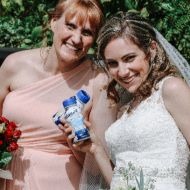
When I entered residential treatment at age 21, I did not believe I deserved love. I had struggled with an eating disorder for almost a decade at that point and was tired, depressed, and frustrated. I didn't re-admit to treatment with the hopes of recovery necessarily. I didn't want to continue living in the hell of my eating disorder, but I felt hopeless about my future.
In treatment, I listened to my dietician and put one foot in front of the other. I went through the actions of recovery because the prospect of staying the same seemed unbearable.
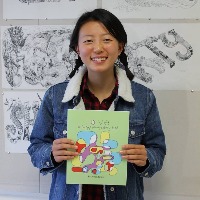
Ask people what they see in an abstract piece of art, and chances are they won’t say the same thing. Every individual shape is a unique interpretation, and this different experience for every viewer is a communication channel between the artist's ideas and the viewer’s thoughts.
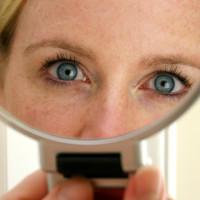
I am six years old, staring at the mirror, knowing there’s a difference between pretty and ugly. I know who’s “pretty” and who’s "ugly;” even my six year old self, learning to write e's and j's, to paint rainbows with my fingers, knew the difference.
From a young age I was taught to believe that thinner equaled better, and larger equaled lesser. My dance teachers reinforced this, my father reinforced this, and the media reinforced this. Eating disorders are typically associated with thinness, and while that can be some people’s experience, it is not everyone’s. Those of us who may not appear to have an eating disorder still have a valid struggle and it is important to talk about. It is important for our eating disorders to not be dismissed simply because of our size or the number on a scale.

The first time I heard about eating disorders, I was in middle school. Our health class watched a film on the dangers of extreme dieting, and the implications it could have on mental and physical health. I watched intently as the film portrayed the typical narrative of a middle-class Caucasian girl who was on a dangerous path toward starvation. At the time, it was inconceivable to me that I could ever develop an eating disorder. I was just an average sized African-American girl who loved food.

I want to begin by introducing you to my ex best friend, the scale. During my struggle with an eating disorder, the feeling of being alone was masked by my new companion, someone who would never lie to me—or so I thought. I spent morning, noon, and night checking in with my best friend. If anyone was going to reassure me and tell me I was doing a “good job,” it was my scale.
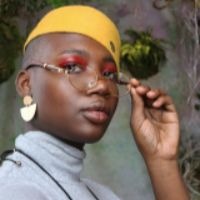
In honor of Black History Month, we are applauding some of the incredible members of the Black community who spread positivity one Instagram post at a time. Their messages of hope and love are inspirational to all people, regardless of skin color.

The beginning of February also marks the beginning of Black History Month, a time to remember pivotal events and people that helped shape the Black community. The countless accomplishments of the community would not have been possible without the unwavering efforts of many persistent and courageous individuals. Here are some examples of Black community members who are continuing to work towards making the world a more equal place through their words of hope and positivity.

Eating disorders are often thought of as diseases that affect only young, white women; but in reality, they affect people from all demographics, including race, ethnicity, and culture.
This Black History Month, we acknowledge how far the field still has to go in recognizing and treating eating disorders in people of color. Despite similar rates of eating disorders among all races in the United States, people of color – especially Black people – are significantly less likely to receive help for their eating issues.