

"Dear KJ" is a monthly advice column by Dr. Kjerstin "KJ" Gruys, sociologist, author and body image activist. She holds a Ph.D. in sociology with a focus on the politics of appearance and is the author of Mirror Mirror Off the Wall: How I Learned to Love My Body By Not Looking at It for a Year (Avery Press, 2012).

For many years, the reality we lived in was one of fear; fear that ED would take the lives of our daughters. Would they be alive at Christmas or their next birthdays? As morose as that sounds, that is the reality of being parents or family members of someone with an eating disorder. We were at battle with ED and every day that they were still on this earth, we had the opportunity to find a way through the fog ED created.

A picture is worth a thousand words, but what about the words themselves? For people who have struggled with an eating disorder, words can play a huge role in whether or not they engage in ED behaviors. Words and language are such critical elements of our relationships and interactions, and it sucks when they continually chip away at our psyches.

Social media has such a defining impact on our society, despite only increasing in popularity within the past few years. This is particularly true when it comes to young adults and eating disorders.
A study conducted by the University of Pittsburgh School of Medicine revealed that young adults who use social media a lot are more likely to develop negative body images and eating disorders.

After tossing and turning all night, the sun will smile through the window to welcome us to a new day – calling for a fresh start. Every day and every moment, we are presented with a new opportunity to start again. We are able to start again from the mistakes we may have made, the tasks we were not able to accomplish, and the negative mindset we may have had.

If you’ve ever sought treatment for an eating disorder, then it is likely that you’ve also struggled with insurance coverage.
Treatment centers nationwide are filled with tales of patients having their inpatient stays cut short because their insurance deemed them “medically stable,” of families who refinanced their entire lives to treat their loved ones, of women and men who bounce in and out of hospitals because they can never stay long enough to make real progress.

Michelle Mankin is a New York Times bestselling romance author who is shifting her writing focus toward young adults in the Tempest series, with each novel touching on a different social issue ranging from eating disorders to domestic violence.

Terms such as “bikini body” and “shrink down” have been thrown around so much, it can feel as though they’re a part of our daily lives. But what are we feeling when we hear them? What impact do they have on us?
Exercise classes and personal fitness can be a great way to feel good about yourself. Underline that or write it in bold if you have to. Feel good about yourself. Not diet, slim down, or get smaller.
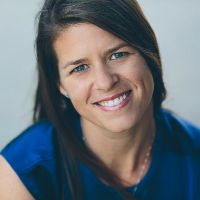
“Monthly Matters with Melody” is a monthly advice column by Dr. Melody Moore, a clinical psychologist, yoga instructor and the founder of the Embody Love Movement Foundation. Her foundation is a non-profit whose mission is to empower girls and women to celebrate their inner beauty, commit to kindness and contribute to meaningful change in the world. Dr. Moore is a social entrepreneur who trains facilitators on how to teach programs to prevent negative body image and remind girls and women of their inherent worth.

In recent months, I have discovered the comforting gift of meditation. As someone who rarely ever gave myself opportunities to slow down, rest, and find peace within my mind and body, this discovery has and continues to offer me peace. Meditation is truly a practice. It is something that I work toward every day in order to transfer it into all areas of my life.