

One of the most injurious facets of eating disorders is the stigma surrounding them. Despite a growing body of research confirming neurobiological and genetic causes of eating disorders, there are persisting misconceptions that these illnesses are lifestyles choices caused primarily by social or psychological factors. Such stigma contributes to the all-too-common picture the public paints of eating disorders: teenage white girl who engages in self-starvation in pursuit of the ever-elusive beauty ideal.

As many of you already know, and have seen when you walk into either a Starbucks, McDonalds, Applebee’s or even Target’s café, right there next to a food item on the menu is its calorie information.
True or false?: Males make up 1 in 10 of those with an eating disorder. Many say false, and think the number is even less. But it’s quite the opposite. Frustratingly, it’s the statistic most frequently quoted in the media. Why? Because this number represents the percentage of males seeking treatment.

Chase Bannister is the founder, senior vice president and chief strategy & clinical integrity officer for Veritas Collaborative, a specialty hospital system for the treatment of eating disorders in a gender-diverse and inclusive environment. He is credentialed as a certified eating disorder specialist by the International Association of Eating Disorders Professionals and is a licensed clinical social worker.
I am excited about the release of Using Writing as a Therapy for Eating Disorders - The Diary Healer, because it resounds with the ‘voices’ of experience of seventy diarists from around the world in exploring the role and use of diary writing as a coping, survival and healing tool.
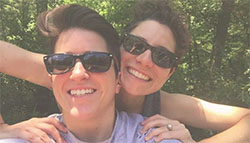
Undoubtedly, one of the first questions we are asked when people meet us is, “Is it weird to have the same name?” quickly followed by, “Do you spell it the same way?” To answer your questions, “no and yes, respectively”. Together we are collectively referred to as “The Jamies”, and individually our nicknames are CJ (Cousin Jamie) and OJ (Other Jamie, that’s me!).
The challenge to overcome an eating disorder persists. It’s no wonder. Shame and embarrassment permeate our language and feelings, and hinder treatment. Stigma. Whether imparted by others, or self-inflicted, it sticks – but only if we let it. To get out of this mindset let’s explore the underpinnings of its existence.
Attribution Theory
Our Stories of Hope are meant to explore the many different paths and journeys in the road to recovery. Each person has a different experience to share, creating insights and experiences for others to feel inspired from. The Stories of Hope remind us that full recovery is possible, and there is help and support available to those struggling with an eating disorder. Here are some of our favorite quotes of recovery from the writers.


A celebration of independence from ED!
Here are ten tips to make sure the Fourth of July is a step forward in your recovery.
CHOOSE A BUDDY.

The American Medical Association voiced its support for “equal health care access and payment for eating disorders” in an announcement last week. The AMA acknowledged that, despite various federal laws requiring parity in coverage of eating disorders, many payers and health plans do not offer equal payment for eating disorders, barring many from receiving necessary health care. The AMA urged for parity in coverage while lamenting that treatment decision are so often made by insurance companies rather than health professionals.