
I was raised with the belief that language is important. I was taught that that the precision of my words could greatly affect the impact of what I say. When I first met my partner a little over two years ago, one of the main things we bonded over was our love of language. A creative writer herself, I could see how carefully she spoke.
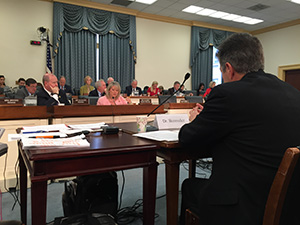
NEDA is excited to announce that the Energy & Commerce Health Subcommittee held a hearing yesterday on H.R. 4153, the Educating to Prevent Eating Disorders Act of 2015, following the bill’s introduction in the House last week by Representative Renee Ellmers.

About three percent of teenagers and four percent of adults are affected by eating disorders, but most do not receive treatment, according to the National Institute of Mental Health.
Why? Because the people around them—health professionals and school personnel, as well as friends and families—often don’t recognize the signs.
Taking time to care for yourself is an important part of recovery from an eating disorder. As Audre Lorde said, “Caring for myself is not self-indulgence, it is self-preservation....” With that in mind, we've compiled a master list of ideas, inspiration, tips and tidbits to help you find the kind of self-care that works for you! Take a look and feel free to experiment!
Look at inspiring messages and images online
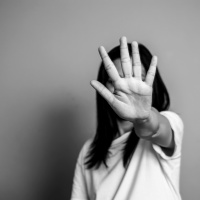
The holidays can be tough! Attempting to juggle the stresses of constantly being surrounded by food and people is A LOT, especially if you struggle with an eating disorder or weight-related issues.

As a little girl, my mother and I would sit on the sofa and watch television together. I remember being fascinated by cosmetic commercials as the supermodels floated across the screen, with seemingly flawless skin and long, flowing hair. I wanted to be apart of that world more than anything, and wondered if there was a place for me there, somehow, someday.
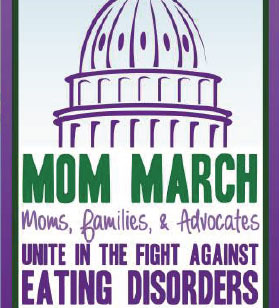
Many of you have asked - what is a MOM March and how was it born?
The M.O.M. (Mothers & Others) March was founded by Alliance For Eating Disorders Awareness, Eating Disorders Coalition (EDC) and Mothers Against Eating Disorders (MAED). The mission of the M.O.M March is both simple and powerful:
When our daughter developed an eating disorder at 15, her educational trajectory was suddenly no longer predictable or inevitable. She stopped completing assignments, and often lay in bed refusing to go to school. In one year’s time she went from being a straight-A student playing two varsity sports to a student with 21 absences and two incompletes in her 10th grade year. In addition to making important decisions about our daughter’s health care, we had to rethink her education.

I hold tight to the railing of the Brooklyn Bridge walkway as I lean my body against it, sheltered beneath the woven suspension of brick and iron rods. I close my eyes in the exhale of the wind and listen to the rustlings of the early Sunday morning. I anchor myself in this peaceful solitude, thinking of all the bodies that have travelled these paths, of the many people who know what it feels like to be suspended over restless waters. In a few weeks, the serenity of this bridge will be very different, and I will no longer be standing alone.

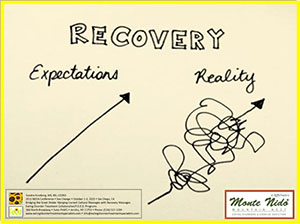
We live in a society where we are inundated with messages that promote diet-culture, the “thin ideal” of female beauty, and serve to glamorize excessive exercise. For individuals who are struggling with an eating disorder, recovering within a cultural climate of unhealthy attitudes towards food and exercise can be tough. However, full recovery and freedom from the food and exercise obsession is entirely possible.