National Eating Disorders Association
Blog

We want our kids to grow up feeling strong and confident in their bodies. We’ve learned a lot about what to do—and what not to do—to promote a positive body image. We know better than to comment on other people’s weight and engage in diet talk in front of our kids. We model self-care behaviors and teach them values related to diversity in all areas, including body size.

But what happens when our children walk into the world?

Fitness and fad diet challenges be damned! Here are five challenges that will actually make you feel good about who you are. 

Content note: Please note that this blog discusses one perspective and doesn't capture all eating disorder representations. 

At their core, eating disorders are all about obsession. Your illness is the voice that never quiets, whispering incessantly about the size of your thighs, the pounds you still think you need to lose, and most of all, food. It whispers about the food you “can’t” eat, the food that’s “safe,” the calories, carbs and grams of fat in every morsel that enters your mouth.

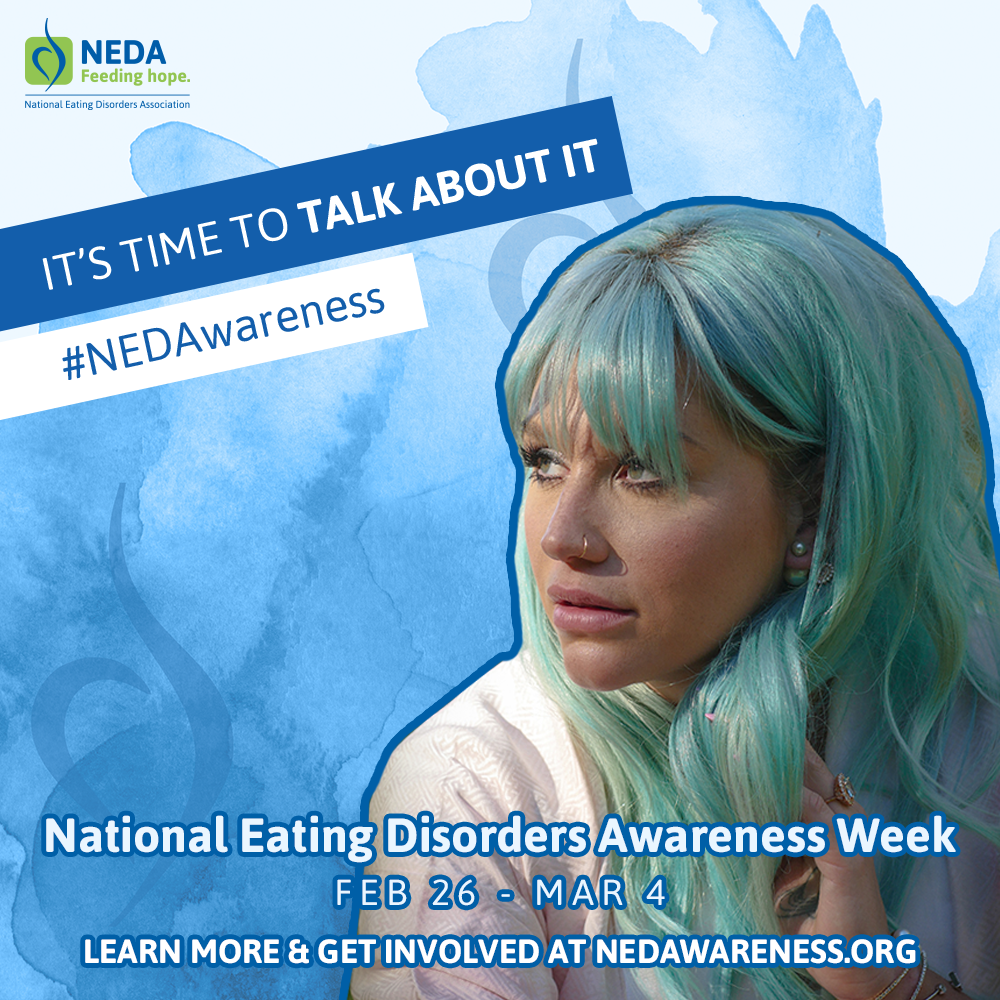
The National Eating Disorders Association (NEDA) thanks singer-songwriter Kesha for sharing her powerful story of recovery and lending her voice to the cause! We know that Kesha’s words will inspire others to seek the help they deserve.

Although 30 million Americans will struggle with an eating disorder at some point in their lives, these potentially-deadly mental illnesses continue to be shrouded in secrecy and shame. 

It's 2017 and women continue to live in a world that constantly devalues them and pressures them to meet unrealistic ideals. This International Women’s Day, get inspired by these powerful messages from nine NEDA community members. 

Often, stories related to recovery and self-acceptance, whether it is about eating disorder recovery, dealing with trauma, or body acceptance, focus on the individual. These stories often celebrate the individual actions and decisions a person has made in their journey. While recognizing individuals for their actions is important, I believe that these stories often erase the importance of community. 

"Dear KJ" is a monthly advice column by Dr. Kjerstin "KJ" Gruys, sociologist, author and body image activist. She holds a Ph.D. in sociology with a focus on the politics of appearance and is the author of Mirror Mirror Off the Wall: How I Learned to Love My Body By Not Looking at It for a Year (Avery Press, 2012).

If you are worried about your friend’s eating behaviors or attitudes, it is important to express your concerns in a loving and supportive way. It is also necessary to discuss your worries early on, rather than waiting until your friend has endured many of the damaging physical and emotional effects of eating disorders. In a private and relaxed setting, talk to your friend in a calm and caring way about the specific things you have seen or felt that have caused you to worry. 

"What is health when we don't have access to humanity and safety in our own bodies?" — Ashleigh Shackelford

In the work that I do in the world, I have a lot of opportunities to talk about body image. And I have to tell you, right now it bores me. It’s not that it doesn't matter. In many ways, it matters more than it ever has. Our world desperately needs fully embodied humans. But here’s the problem: working with body image leaves US doing all the work.

Pages